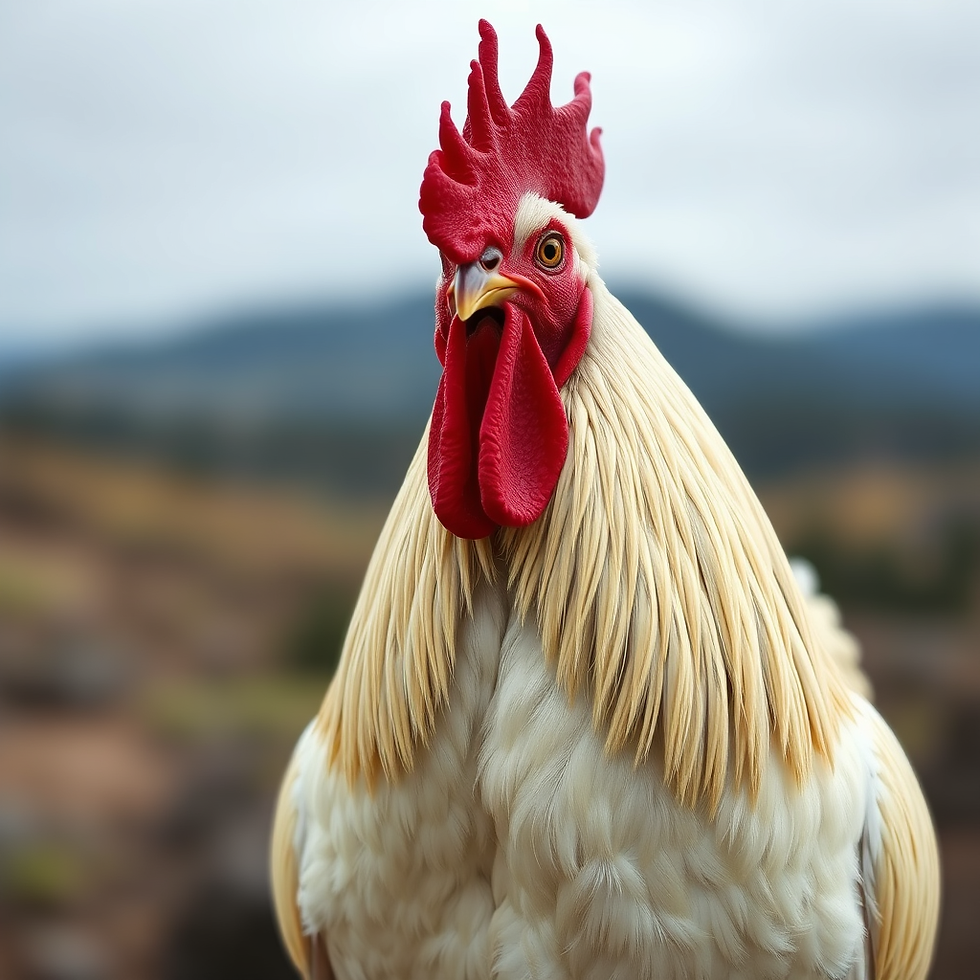
What Is the Rooster For?

The other day I was having a conversation about owning some acreage.
You know the dream.
A little land.
Some chickens.
Fresh eggs every morning.
And somewhere in the conversation I asked a question I’d never really thought about:
What exactly is the rooster for?
Because here’s what I learned.
A hen doesn’t need a rooster to lay eggs.
She can produce eggs all by herself.
And immediately I thought…
Well damn. So what does he do?
Turns out, quite a bit.
The rooster watches.
While the hens are eating, scratching, moving around, he’s paying attention.
And when he sees danger, he sounds the alarm.
Even crazier, roosters have different alarm calls depending on whether the threat is coming from the ground or from the sky.
He sees something worth eating?
He calls the hens over.
He doesn’t have to eat everything himself.
He alerts the flock:
There’s something good over here.
And yes, the hens can produce eggs without him.
But if you’re trying to create another generation, that’s where he becomes essential.
And man…
I couldn’t stop thinking about that.
Because maybe we’ve misunderstood leadership.
Leadership isn’t:
“Nobody here can function without me.”
Your wife doesn’t need you to be capable.
Your children aren’t incapable without you.
The people around you can produce.
The question isn’t whether they can function without you.
The question is:
What changes because you’re there?
Do people feel safer because you’re paying attention?
Do you notice danger before it reaches the people you love?
When you find something good, do you call your family toward it?
Are you consuming everything for yourself, or making sure they eat too?
And are you thinking beyond today’s production toward the generation coming after you?
Because maybe the rooster isn’t standing there saying:
“Look how important I am.”
He’s watching.
He’s warning.
He’s calling.
He’s protecting.
He’s thinking about what comes next.
And maybe that’s a pretty damn good picture of leadership.
Not:
“You need me in order to function.”
But:
“Because I’m here, I’m going to use my strength, awareness, and voice for the good of the flock.”
So maybe the question for us as men isn’t:
“Does my family need me?”
Maybe it’s:
“What becomes possible for my family because I’m here?”


Comments